Not in the USA - Meet the Fanático who says it's the best baseball league in the world


Leads with the question the episode answers
In March, I watched Chinese Taipei go 2–2 and get sent home in the pool stage. Two wins, two losses, and the familiar feeling of an island of twenty-three million people going quiet at the same moment.
Ten days later I watched Venezuela beat the United States 3–2 in Miami. Eugenio Suárez doubled home the go-ahead run in the top of the ninth. Maikel García was named MVP. A country that has spent two decades in the headlines for all the wrong reasons had just won the World Baseball Classic.
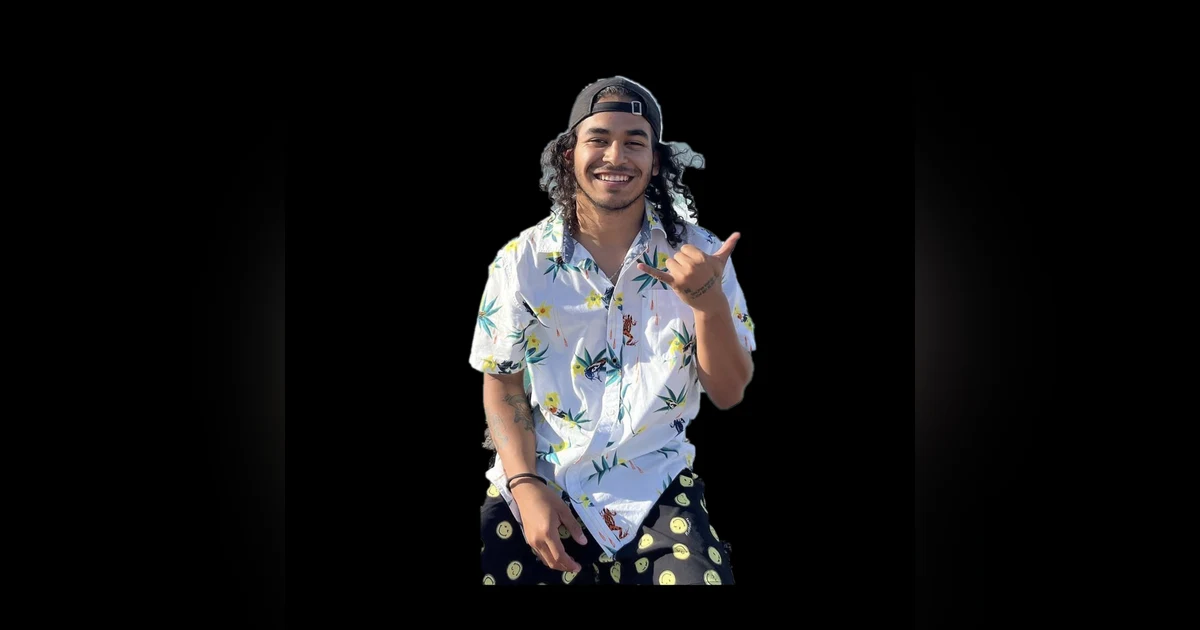
I wanted to understand what that actually felt like from the inside. So I sat down with Josué — who carries Venezuelan roots and Uruguayan heritage, and who had already walked me through the football half of his DNA in an earlier episode. This time we went after the other half.
"We all have a favorite player, someone we grew up watching. And despite all the problems, I think baseball — and the pride of Venezuelans — is something they will never take from us." — Josué
That line opens the episode, and by the end of the conversation I understood it was also the thesis.
-
Why beating the Dominican Republic mattered more than beating the USA
My first question was the obvious one: when the final ended, what was the first thought in your head?
His answer had nothing to do with the United States.
"Beating the Dominican Republic is like beating Argentina. Like beating Brazil. It's much better to beat the Dominican Republic than to beat the United States or Japan — it's more about the rivalry." — Josué
This is the part that doesn't translate onto a bracket. On paper, Venezuela's run was Netherlands, Israel, Nicaragua, Dominican Republic, then Japan, Italy, and the USA in the final. Seven wins, no losses. But ask a Venezuelan which one they'll be describing to their grandchildren and it's a pool game — 7–5 over the Dominicans, a team that had spent decades being treated as the region's default giant.
I recognized this immediately. Every small baseball nation has a neighbor whose shadow they've been standing in. The trophy is one thing. Beating them is another.
-
The country that stops
Josué explained that Venezuela's real baseball culture doesn't live in March. It lives in the winter league, and specifically in one fixture: Leones del Caracas against Navegantes del Magallanes.
"The country literally stops. You go into any place to buy a hamburger, they have the game on. You go to the hospital, and the doctors have the game on. Everywhere." — Josué
He described the Venezuelan league as hotter, scrappier, more chaotic than MLB — and insisted the chaos isn't a flaw. In the Caribbean they call it béisbol caribe, and he compared the gap to South American football versus European football. Different sports, almost.
Then he said the thing that reframed the whole tournament for me:
"The Altuves, the Acuñas, Salvador Pérez — they didn't fall from the sky. And they didn't learn to play under pressure in the big leagues. They learned it at Leones del Caracas, against Magallanes." — Josué
The WBC roster the world applauded in March was assembled from players who had already been tested in front of crowds that treat a January league game like a war. Playing for Caracas, he told me, is the equivalent of playing for Boca Juniors.
-
What Taiwan and Venezuela have in common
Somewhere in the middle of this conversation I stopped being an interviewer.
The United States is good at many sports. That's exactly why baseball can never mean there what it means in Caracas — or, for that matter, in Taoyuan. When a country is good at everything, nothing carries the whole weight of national identity. When a country has one thing, that one thing becomes the country.
"Almost the entire culture is baseball. The United States has many sports it's good at. But the one thing Venezuela is best at is baseball. So it's part of their culture, and Venezuelans hold onto that very tightly." — Josué
I asked him what the Venezuelan league has that MLB can never have. He didn't hesitate: la pasión. Not as a marketing word. As a description of the actual noise level.
-
A rubber ball and your fist
The part of the interview I keep returning to isn't about professional baseball at all.
I asked Josué where it starts — what's underneath the contracts, the academies, the stadium lights. He described a school-day plan that costs almost nothing:
"You buy a rubber ball — you know, the very, very cheap rubber ones — and you play baseball with nothing. Just your hands. You take the rubber ball, and the bat is your fist." — Josué
Kids pick sides, argue over who's on which team, choose the best players out of whoever showed up. He called it beautiful twice in the same breath. That's the base layer. Strip away MLB entirely and Venezuelan baseball still exists, in a concrete street, with a broomstick and a bottle cap.
And it is also, bluntly, a way out.
"It's better that the kids in the neighborhood dream of being baseball players than dream of being criminals, or a corrupt politician — because there's already plenty of that in Venezuela." — Josué
The answer to the question I'd been building toward
Near the end I asked him the one I'd written down before we started. When the world looks at Venezuela, it usually sees headlines about crisis, economics, division. But it also sees a Venezuelan ballplayer smiling and flipping a bat with absolute joy. So what is it that the world's hardship can never take away?
He laughed, called it a good question, and thought about it for a few seconds.
"I think it's the illusion — and the pride." — Josué
Then he told me about the days after the win. A country he described as divided his entire life, briefly not divided.
"Since I was born, I've seen Venezuela in a bad way. Venezuela separated. Venezuela disunited. And that sport made us come together — there was no political difference, no social status, no problems. Everything was perfect. It was the happiest day I've seen in my life, at least as a Venezuelan." — Josué
I don't think a trophy fixes an economy. Neither does he. But I've come around to the idea I put to him in the interview and only half-believed at the time: a championship like that works as a deep, corrective breath for a country. It doesn't solve anything. It just lets everyone exhale at the same time, together, for the first time in years.
Taiwan went out in the pool stage this year. We'll be back. And when it eventually happens for us, I'll know exactly what I'm looking at — because a Venezuelan already explained it to me.
Key takeaways
- The rivalry outranks the trophy. Venezuela's 7–5 pool win over the Dominican Republic means more to Venezuelan fans than the 3–2 final against the USA. Regional pride is measured against neighbors, not superpowers.
- The WBC roster was forged in the winter league. Altuve, Acuña, and Salvador Pérez learned to handle pressure at Leones del Caracas and in the Caracas–Magallanes rivalry, not in MLB.
- Caracas vs. Magallanes stops the country. Restaurants, hospitals, everywhere — the game is on. It's the closest thing baseball has to a South American football derby.
- Being good at one thing concentrates identity. The USA is good at many sports, so none of them carries the nation. Venezuela — like Taiwan — has one, and it carries everything.
- The foundation costs nothing. A cheap rubber ball and your own fist for a bat. Strip away the money and the culture is still fully intact.
- Baseball functions as an alternative. In neighborhoods where the realistic options are limited, dreaming of the big leagues is a genuine off-ramp.
In Venezuela, when the headlines are all about crisis, there is still one sound that cuts through: a rubber ball off a bare fist, echoing down a concrete street in Caracas. Nobody can take that away."
Welcome to DIVERAX. In this episode, we return to Josué's roots for a different kind of pilgrimage — not through the cathedrals of South American football, but through the barrios, the legendary ballparks, and the unbreakable baseball culture of Venezuela. Carrying his Venezuelan heritage, Josué unpacks why, in a country weighed down by political division and economic hardship, baseball isn't a distraction from the crisis — it's the last thing the crisis can't touch.
What we unpack in this episode:
A Nation's Last Refuge — How a euphoric World Baseball Classic run, toppling heavyweight rivals like the Dominican Republic, became something bigger than sport. For a few days, millions of Venezuelans — divided by politics, class, and years of hardship — stood behind the same flag. Josué calls it "a deep, corrective breath for the country."
Concrete Streets & Rubber Balls — Long before the big leagues, this is a game built in the barrio: fathers shouting instructions from the grandstands at kids' games, cheap rubber balls, bare fists standing in for bats, and bottle caps for the ones who couldn't even afford that. It's a childhood ritual that shapes identity as much as it shapes players.
A Pathway of Hope — In neighborhoods where the alternatives are crime or corruption, baseball offers something rarer: proof. Idols like Miguel Cabrera — "the Messi of baseball" — and Ronald Acuña Jr. show kids that a rubber ball and a dream can carry you further than the streets ever could.
The Caribbean Uprising — Why the real hardcore culture isn't the WBC — it's the Caribbean Series, where legendary clubs like Leones de Caracas carry the weight of a country's history, and where Latin stars are rewriting baseball's unwritten rules, bat flips and all, forcing a sport built on restraint to finally play with Caribbean fire.
This is a conversation for anyone who's ever wondered how a game survives — and even thrives — inside a country's hardest years. Long before the MLB contracts and the World Baseball Classic trophies, baseball in Venezuela was, and always will be, a kid, a rubber ball, and a country refusing to let go of its pride.
#besbol #baseball #politics#venezuela#MLB#